
Criminal Court Cases in Franklin County
Franklin County criminal court cases divide by charge level. The 8th and 62nd Judicial District Courts handle district matters, with felony files kept by the Franklin County District Clerk. Class A and Class B misdemeanor records generally belong to the County Court and County Clerk. Fine-only offenses may remain with a justice court or the Mount Vernon Municipal Court. A city citation may never become a county criminal case, so the issuing court matters as much as the name on the record.
The clerk is the custodian of the filed case. That file differs from a sheriff arrest report or jail booking entry. It can show what prosecutors filed, how the accused pleaded, which motions the court heard, and how the charge ended. The Franklin County District Dockets provide useful calendar context. The official docket interface is shown below. It helps locate a setting, but the clerk file remains the source for the result.
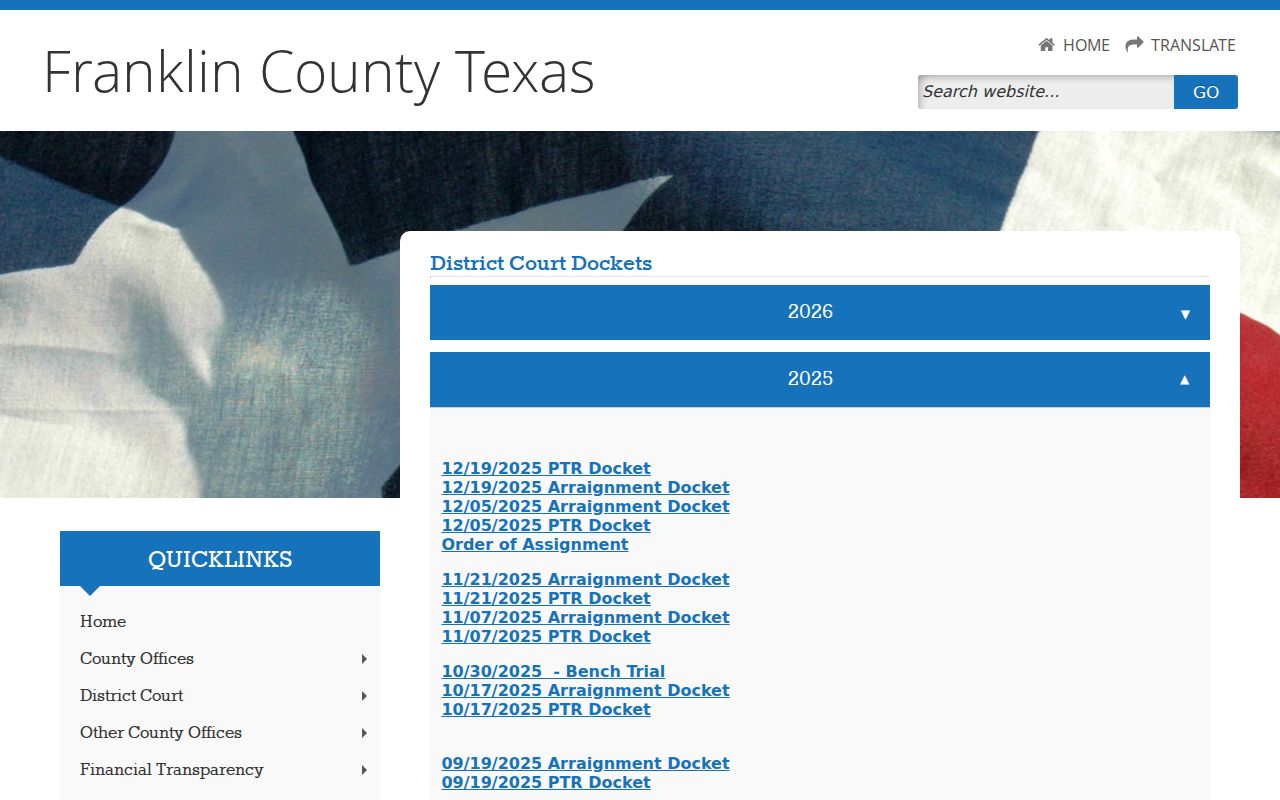
The separate arraignment, pretrial, and felony labels show why one broad name search cannot replace a court-specific Franklin County case lookup.
Franklin County Court Record Counters
Two local counters serve different Franklin County court records. The County Clerk works from the historic courthouse at 200 N. Kaufman Street in Mount Vernon and handles County Court misdemeanor files. The District Clerk works at Courthouse Annex West, 204 Texas Highway 37, and holds felony records for the district courts. Asking only for the “courthouse” can send a visitor to the wrong building.
Franklin County Clerk
200 N. Kaufman St.
Mount Vernon, TX 75457
903-537-8357
Class A and B misdemeanor searches, copies, certification, and County Court dockets.
Franklin District Clerk
204 Texas Hwy 37
Mount Vernon, TX 75457
903-537-8337
8th and 62nd District Court felony files, archived records, and district court resources.
The County Clerk posts hours of 8:15 a.m. to noon and 1:00 to 4:30 p.m. Monday through Thursday, with Friday hours of 8:15 a.m. to 3:30 p.m. Call before travel. County notices can alter access, and the office closes for lunch on most weekdays.
Franklin County Case Record Searches
Begin with the likely charge class and the correct clerk. Search dated county or district docket pages for a cause number, then use that exact number when asking for the file. A name alone can return similar people or spelling variants. The County Clerk's official Records Public Access site also warns that its index works like a library card catalog. It is a finding aid, not a certified copy of the underlying record.
- Classify the matter as felony, misdemeanor, or fine-only and identify the court that received it.
- Search the official docket archive by year and setting type, using all known name spellings.
- Record the cause number, court, docket date, and case type from the matching entry.
- Ask the proper clerk for the docket sheet, charging instrument, judgment, sentence, and public bond orders.
- Request plain or certified copies and confirm the charge before staff begins paid work.
The Franklin County Clerk Records Public Access application is the official online entry point for records it covers. Its landing screen appears here. Free viewing does not guarantee that every criminal file or image is online.
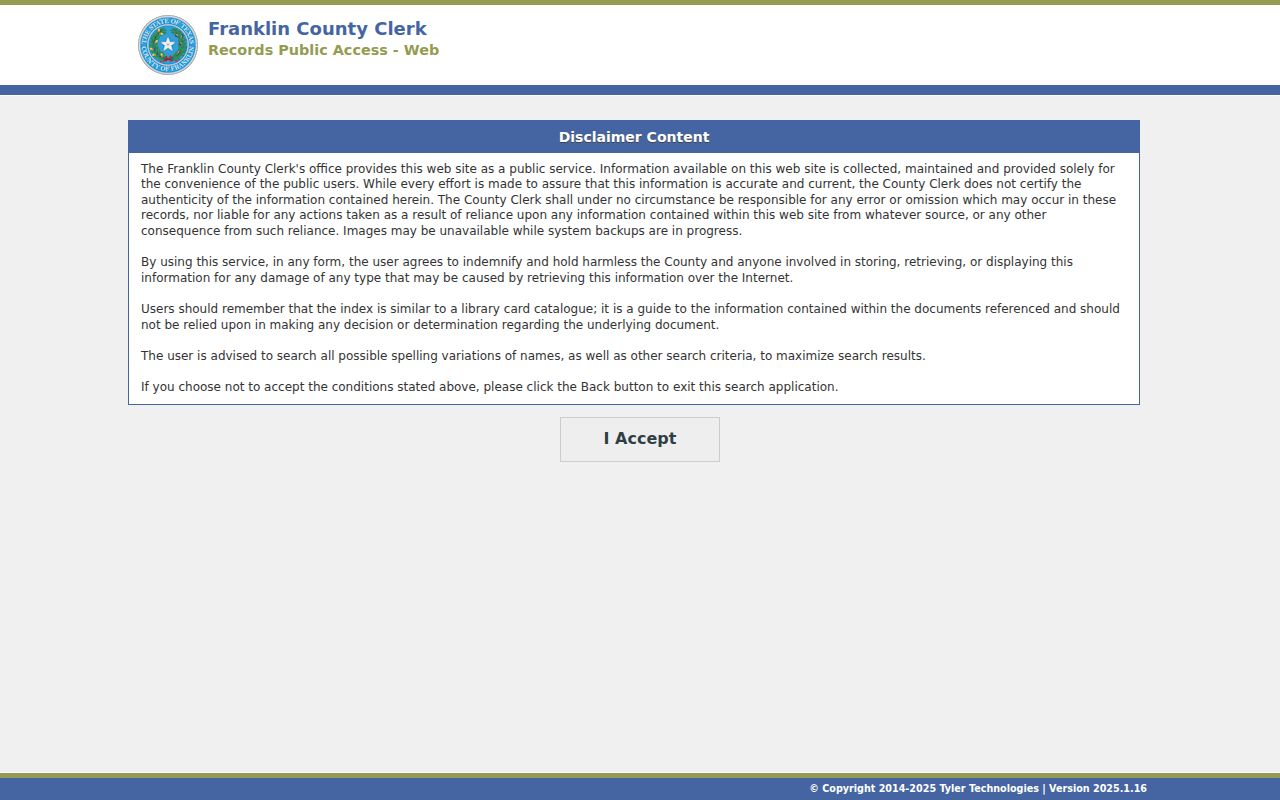
Use the online index to find a lead, then verify any Franklin County criminal case against the actual clerk file.
| Search Control | Use | Required | Practical Note |
|---|---|---|---|
| Disclaimer | Accept or return | Yes | Acceptance opens the application |
| Record category | Select record family | Varies | Confirm criminal coverage live |
| Name | Party search | Varies | Try spelling variations |
| Case number | Exact record search | No | Best when taken from a docket |
| Date range | Narrow results | No | Useful for common names |
| Register or sign in | Buy clean prints | For paid copies | Card payment is used for printing |
Franklin County Criminal Docket Trail
Franklin County publishes district lists labeled Arraignment, PTR, Felony, Bench Trial, WHC, and Order of Assignment. “PTR” means a pretrial setting, while an arraignment is the point when the accused is called to enter a plea. These PDFs are calendars. They may show a cause number, caption, court, setting, counsel, charge label, or custody notation, but they do not consistently show the complete filed papers or final judgment.
The County Court docket archive gives the misdemeanor side of the local trail. Its screen is shown below. A person who finds a name should note the date and cause number, then ask the County Clerk whether the setting changed and whether a judgment is available.
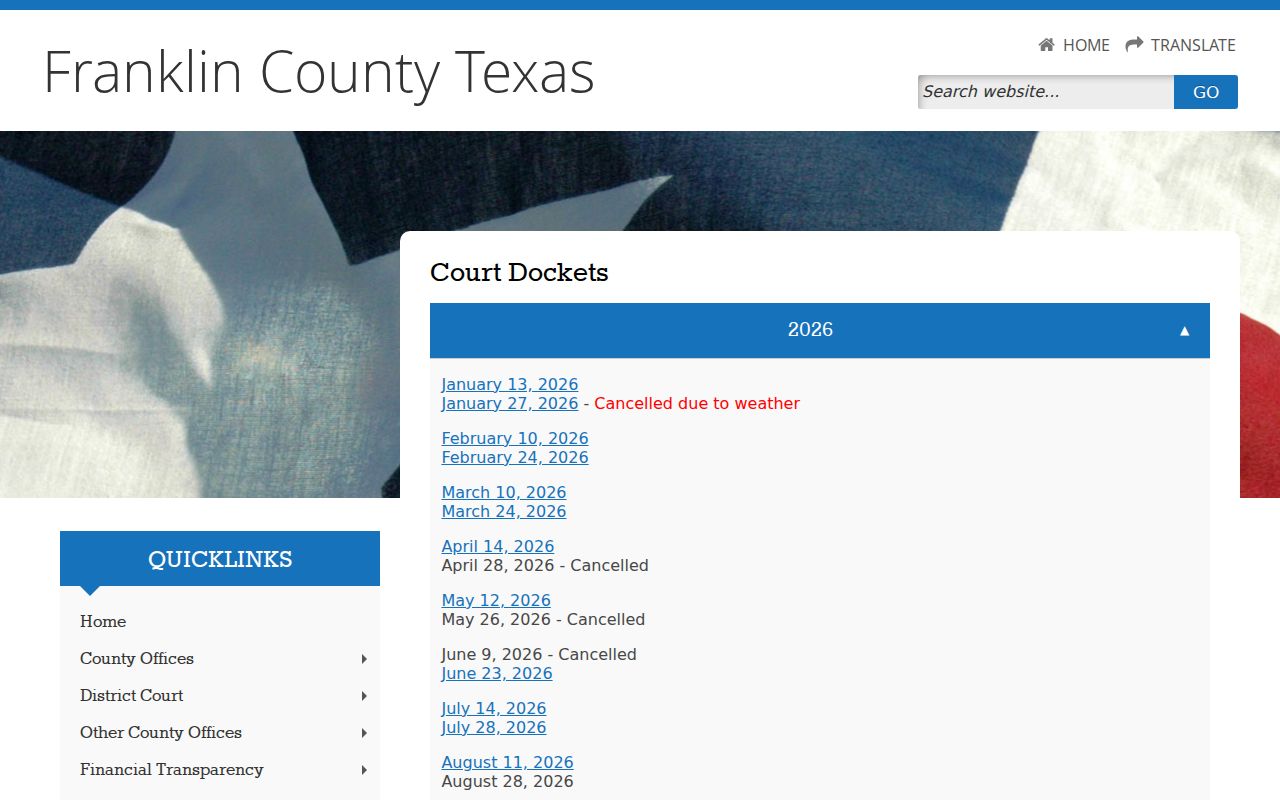
A missing name proves little. The matter may sit in another court, use another spelling, predate the online archive, or remain only in a paper file.
Note: A Franklin County docket identifies court activity, but only the filed judgment or disposition establishes how the charge ended.
What a Criminal Case File Contains
A Franklin County criminal case file is built over time. The charging instrument states the accusation accepted for filing. Later docket entries track hearings and motions. A plea, verdict, dismissal, or other disposition explains the outcome, and the judgment records the court's formal action. Sentence and cost entries may follow. The public file can still omit protected identifiers, victim details, sealed records, grand-jury material, and documents covered by a nondisclosure order.
| Cause Number and Court | The unique local identifier and the court assigned to the case. |
|---|---|
| Charging Document | An indictment for a felony, an information for many misdemeanors, or a complaint supporting the case. |
| Docket Entries | A dated sequence of filings, settings, orders, pleas, and other court events. |
| Hearing Dates | Past and future settings, which may include arraignment, pretrial, or trial. |
| Disposition and Judgment | The recorded outcome and the court's signed determination. |
| Sentence and Conditions | Jail or prison terms, fines, credit, or community supervision when ordered and public. |
Ask for the parts that answer the question. A calendar entry may be enough to confirm a hearing. A certified judgment is the stronger source for a final result. The broader Franklin County criminal history overview explains why a court file and a state rap sheet can differ.
Franklin County Case Terms Decoded
Short labels can hide major differences in a Franklin County case. A dismissal ends a charge without a conviction, but it does not erase all arrest or booking records. Deferred adjudication postpones a finding of guilt while the person completes court-ordered community supervision, and qualifying deferred records can still appear in the Texas DPS public product. An acquittal is a judgment that guilt was not found.
- Indictment
- A grand jury's written felony accusation, filed in the District Court record.
- Information
- A prosecutor-filed charging instrument commonly used for a misdemeanor.
- Disposition
- The recorded outcome of a charge or criminal case.
- Nolle prosequi
- A prosecutor's formal decision not to continue a charge when that term appears.
- Community supervision
- The Texas term commonly used for probationary court supervision.
Read each term beside the signed order. A docket label alone may describe a setting rather than an outcome.
Criminal Case Stages in Franklin County
A Franklin County case can begin with an arrest or summons. A magistrate handles prompt warnings, probable-cause review, and bail issues. The prosecutor then screens the facts. A misdemeanor may proceed by information, while a felony generally requires a grand-jury indictment. Arraignment and pretrial settings follow. The case may end through a negotiated plea, dismissal, trial, or acquittal, with judgment and sentencing entered afterward.
Case flow: Charges Filed › Arraignment › Pretrial › Plea or Trial › Disposition › Sentencing
Charges can change between booking and filing. That is why the alleged offense on a jail record should not be copied into a case summary as though it were the final court charge. The filed instrument and later judgment control the court history.
Franklin County Court Copy Costs
The County Clerk publishes a $5 search charge per name per record type, $1 for each copied page, and $5 for certification of each document in addition to page fees. District Clerk charges should be confirmed with that office rather than borrowed from the County Clerk schedule. Searchers who only need to read a public page can ask about inspection before ordering copies.
The official Franklin County Clerk fee schedule is the source for current County Clerk charges. Its published page is shown below. Confirm the amount and accepted payment before ordering because fee pages and office rules can change.
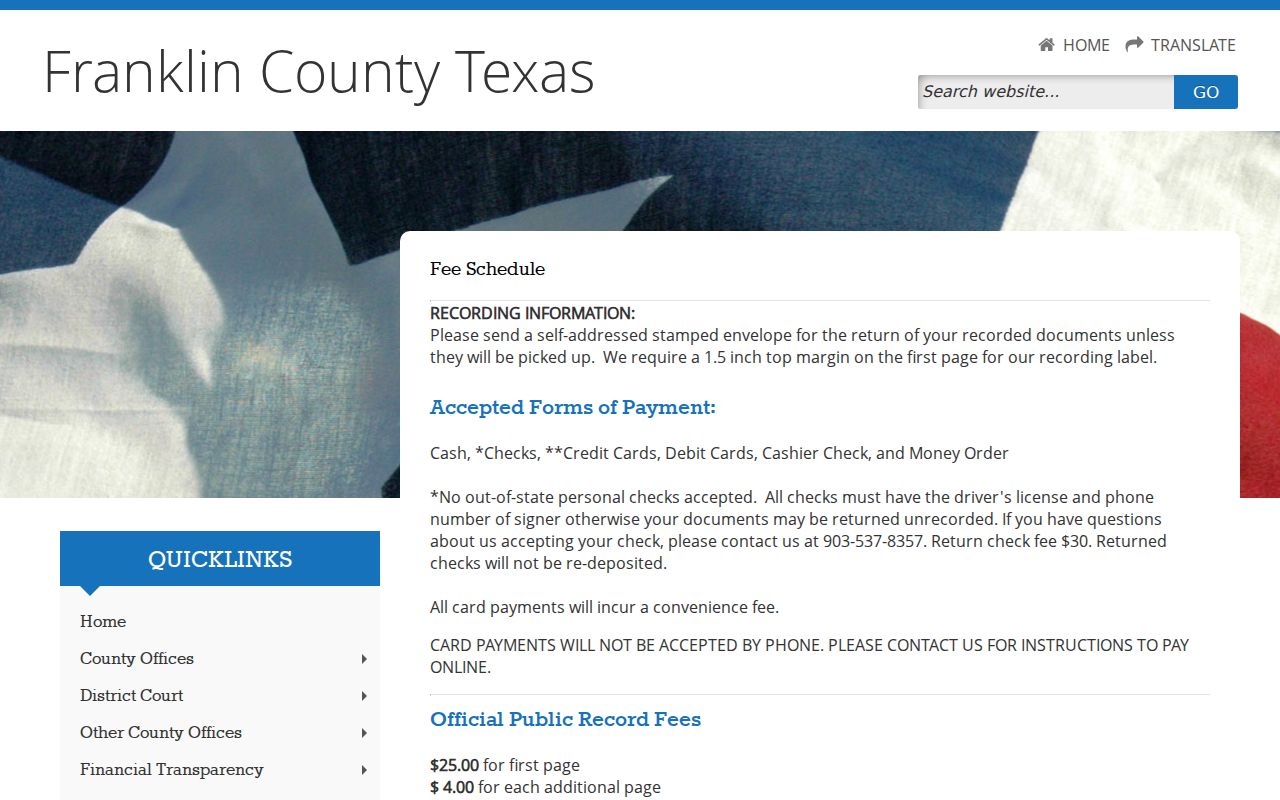
Certification matters when a reader needs the clerk to attest that the copy matches the official Franklin County court record.
Access Rules for Case Records
Texas court access runs through the clerk and court framework. The Texas Public Information Act governs many agency records, but an ordinary public-information request is not a way around court sealing rules. Juvenile records, victim details, protected identifiers, grand-jury material, expunged files, and qualifying nondisclosed information can be withheld or absent from a public view.
Online redaction does not always mean the whole Franklin County case is closed. Ask the clerk which public portions or certified orders remain available.
If an expected case is missing, give the clerk the full name, approximate filing year, charge type, and any cause number. Ask about spelling variants, archived paper files, and the court's own sealing status. The statewide re:SearchTX portal is not a complete fallback for criminal cases. Texas court research reports that its large document collection excludes criminal case records, so absence there does not disprove a Franklin County filing.
Federal Cases From Franklin County
Franklin County lies in the Eastern District of Texas, but a federal criminal case does not move into the County Clerk or District Clerk file. Federal docket sheets and filed documents are obtained through PACER or the federal clerk. Account and Judiciary usage fees may apply. The county docket should not be used to rule out a federal prosecution.
The official PACER access portal is the source for federal case searching and billing terms. Its entry screen appears below. Search by the federal party or case identifier, then verify the district and docket number before paying for documents.
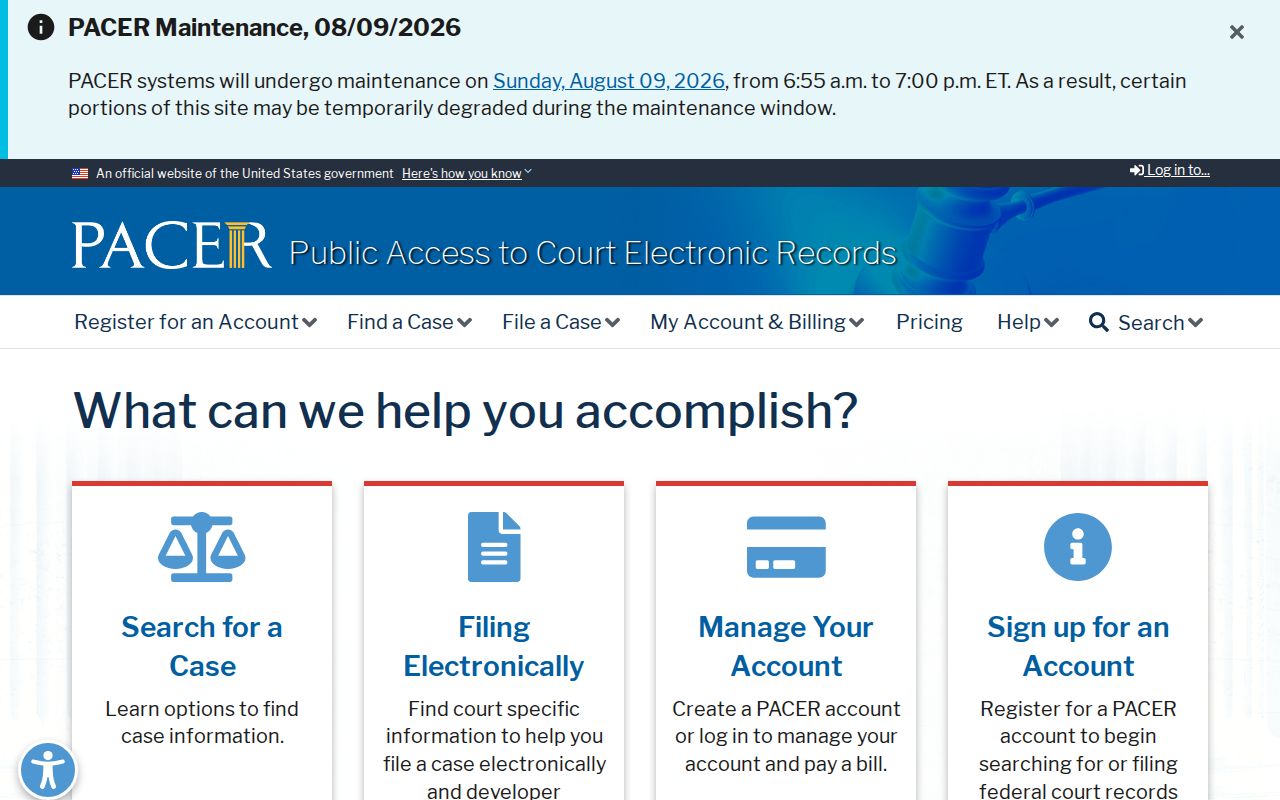
A federal PACER result is a separate record layer and should not be merged with a local Franklin County cause unless the documents establish the link.