
Franklin County Sex Offender Checks
The Texas Public Sex Offender Registry is the main public search channel for Franklin County. The Texas Department of Public Safety manages it. A county filter is useful when the person or address is known to be in Franklin County, while the city and ZIP fields can narrow a search around Mount Vernon or another locality. A name search is better when identity is known but the current place is not. Each route answers a different question, so a broad Franklin County search and a focused name search may produce different lists.
Franklin County registration is not a second public database. Under Texas Code of Criminal Procedure Chapter 62, the applicable authority may be the Franklin County Sheriff, a municipal police chief's office, or another assigned centralized authority. The registrant must follow the authority identified by DPS or the court. Members of the public should use the DPS result as the current public listing, then call the responsible law-enforcement office only when a safety or compliance issue requires local attention.
Before searching, gather the most reliable detail available. A full name helps distinguish people with similar names. A complete address supports a place search. City, county, and ZIP filters help define the area, but they should not be treated as proof that no other registration location exists. The displayed record date and verification information matter because an old screen capture may no longer reflect the live Franklin County registry entry.
Franklin County Registry Search Routes
The Franklin County DPS registry route offers two practical paths. Use a person search when the goal is to confirm a known name. Use a location search when the goal is neighborhood awareness around a Franklin County address. Location filters can include city, county, ZIP code, and a radius where the live interface makes that option available. Map and list views can reveal the same public data in different forms. A map is useful for distance and location context, while a list is often easier to scan for dates, names, and status.
The official DPS name and location search form shows the controls used to start a Franklin County lookup.
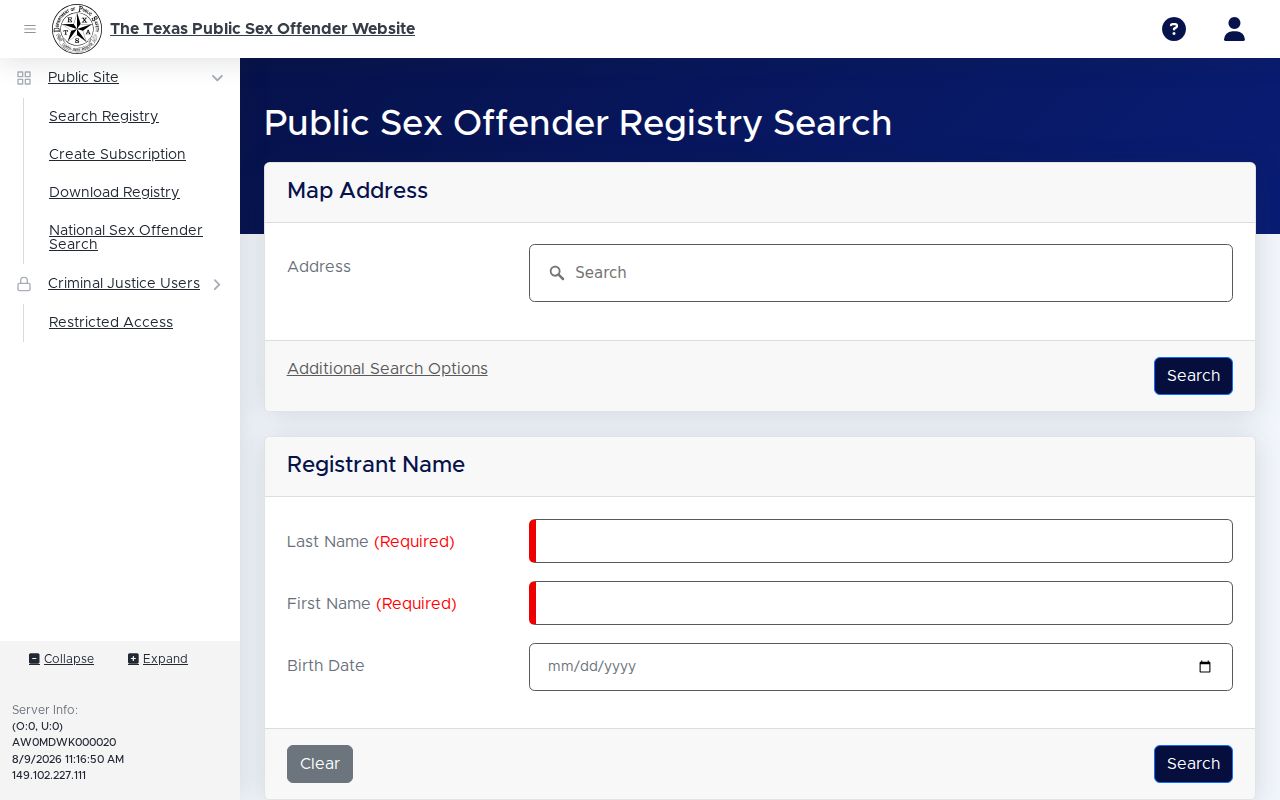
This search screen helps a reader choose between identity details and geographic filters before opening any Franklin County registry profile.
No county-maintained offender list should be assumed from the absence of one on the sheriff's site. The state registry remains the authoritative public directory. For a suspected address problem or failure to register, report objective facts to the Franklin County Sheriff at 903-537-4539, the assigned city police department, or DPS. Do not investigate at the listed address or confront anyone.
Texas Public Sex Offender Registry Searches
DPS publishes qualifying registration information for all Texas counties. A Franklin County search is free and does not require a paid record credit. Search terms should be as precise as the known facts allow, but a cautious user may try both the full Franklin County filter and a city or address route. The portal's results are public-safety records, not complete criminal histories. The underlying conviction and sentence remain with the court that handled the reportable offense.
- Open the DPS registry and read its current conditions of use before entering a search.
- Choose a name route or enter an address, city, Franklin County, ZIP code, and any supported radius.
- Review the result list or map. Use name, photo, physical details, and location to avoid confusing two people.
- Open the profile and check its status, verification date, registration authority, reportable offense, and public notices.
The live interface controls the exact options. Radius choices and view controls can change, so select from the values the registry currently displays rather than relying on an old image.
| Field Label | Type | Required | Notes |
|---|---|---|---|
| Last Name | Text | Route-dependent | Starts a name search. |
| First Name | Text | No | Narrows a name result. |
| Address | Text | Location route | Use the complete street input supported by the portal. |
| City / ZIP Code | Text or select | No | Narrows the geographic area. |
| County | Select | No | Select Franklin for a county-wide search. |
| Radius | Select | Proximity mode | Use the current options shown by the live interface. |
| Map / List | View controls | No | Switches between geographic and list displays. |
Franklin County Registry Across States
A Franklin County location search is the right starting point when the concern stays in Texas. The National Sex Offender Public Website, maintained by the U.S. Department of Justice, adds a cross-state layer. NSOPW federates records supplied by participating jurisdictions. It is useful when someone may have moved across a state line or when a trip, family visit, or safety plan spans more than Texas.
The NSOPW national registry interface illustrates the broader search route available beyond Franklin County.
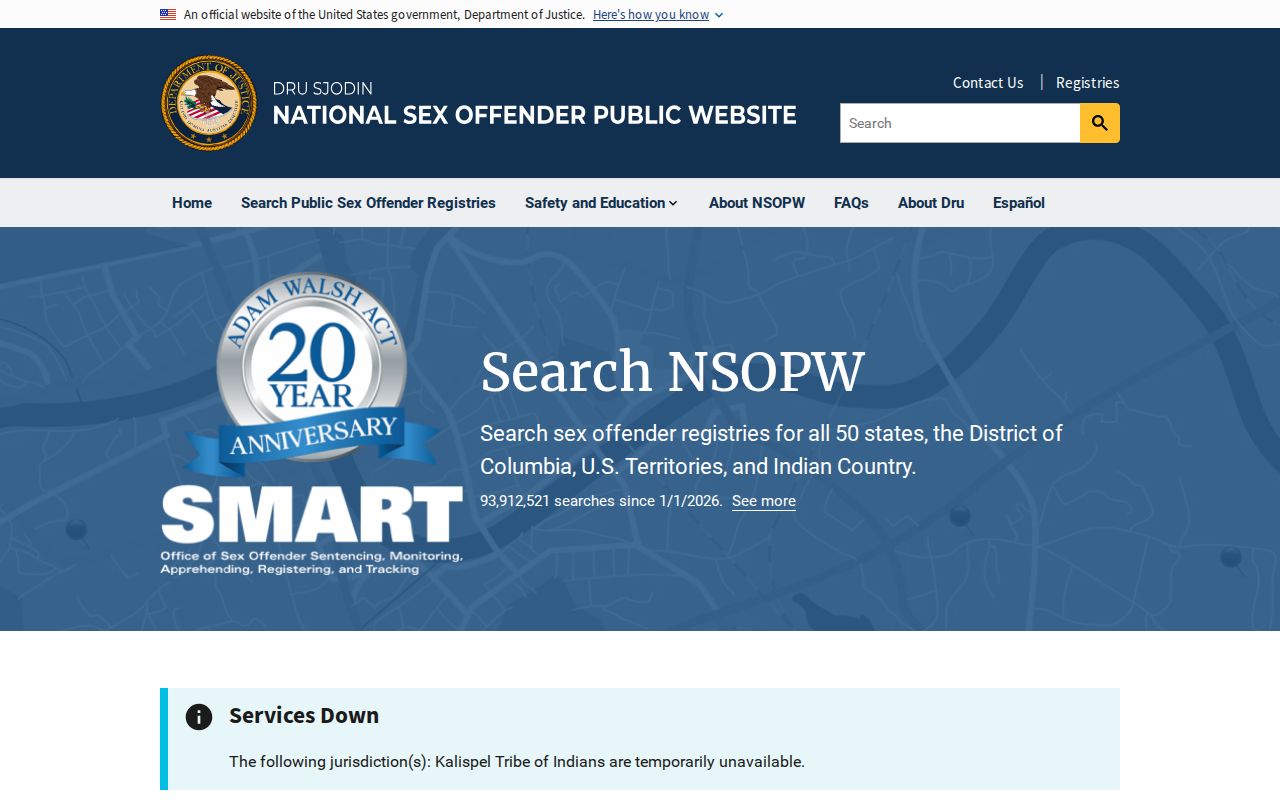
The national tool broadens the geography, but the linked Texas profile remains the better place to read Texas-specific status, risk, and registration details.
A missing NSOPW result should not be read as a formal clearance. Jurisdiction participation, search spelling, current data, and the scope of public disclosure all affect results. If the matter concerns a known Franklin County address, return to the DPS portal and run the county or address search directly. That route keeps the search tied to the agency that maintains the Texas Public Sex Offender Registry.
Registry Profiles: What They Show
A Franklin County DPS profile gives enough public information to identify a registrant and understand the registration entry. It may show the current registration name and aliases, a photograph, physical descriptors, the registered address or location status, and the authority responsible for registration. It can also show the reportable offense, conviction context, risk level, status, verification date, and notices that Texas law permits DPS to publish. Scars, marks, tattoos, vehicles, school information, or work information appear only when the law and public interface permit them.
The DPS registry interface demonstrates how public fields are organized without requiring a Franklin County page to republish any person's details.
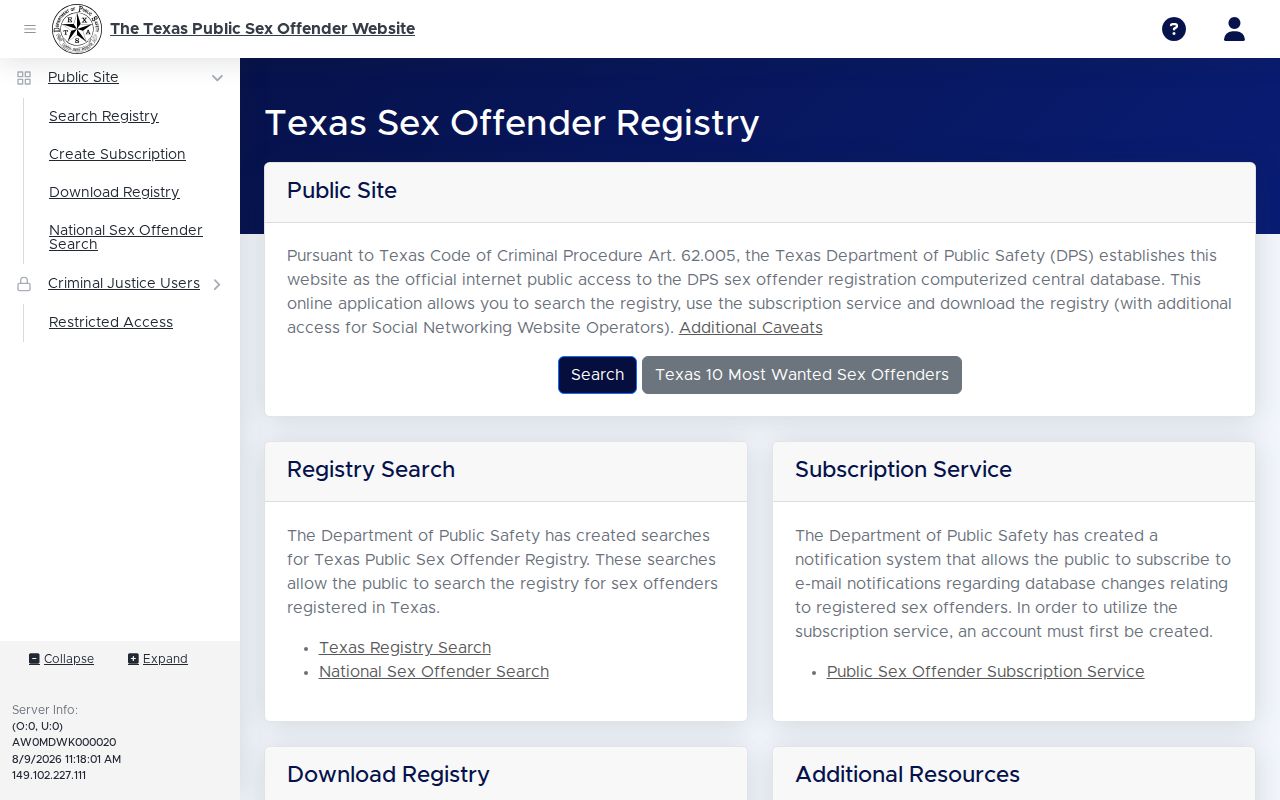
The field layout encourages readers to confirm identity, status, and dates on the live source instead of saving or circulating a stale copy.
| Name & Aliases | Current registration name and other public names used to distinguish identity. |
|---|---|
| Photo & Description | Photograph, age or birth-date display, and permitted physical descriptors. |
| Registered Location | Published address or location status and the assigned registration authority. |
| Offense & Context | Reportable offense, statute or jurisdiction, conviction date, and public sentence or release context. |
| Risk Level | Texas numeric level one, two, or three, which is not the same as a federal SORNA tier. |
| Status & Verification | Compliance status, last verification information, registration duration, and public notices. |
Read the whole record. A name and address alone may omit the date that tells whether the entry is current. Likewise, a reportable offense is the historical basis for registration, not evidence that a new Franklin County criminal case has been filed.
Franklin County Registry Verification
Verification dates help place a Franklin County registry entry in time. Texas Code of Criminal Procedure Article 62.058 sets verification frequency by the person's assigned duty. Some lifetime registrants verify once each year. Others covered by the statute must verify every 90 days. The public profile should be read with the specific requirement shown for that record, since a general schedule cannot establish whether one person is compliant.
The local appointment location and office hours were not published on the official Franklin County website. The practical channel is to call the Franklin County Sheriff at 903-537-4539 or contact the assigned municipal authority. A public user who sees an address that appears out of date should report the observation and the profile details. The authority can compare that report with records that are not public.
Article 62.051 generally requires a registrant to register and verify with the applicable Franklin County law-enforcement authority after release or a move, within the period the statute sets. Advance reporting rules also apply to certain changes. Article 62.102 makes a failure to comply a felony, with the level tied to the underlying duty and possible repeat-offense enhancement. Only law enforcement should decide whether the facts support an investigation.
Registration Levels and Duties in Texas
Texas uses numeric risk levels that describe assessed danger to the community. Level one reflects low danger under the state screening process, level two reflects moderate danger, and level three reflects serious danger. These labels are not federal SORNA tiers. Registration duration follows the reportable offense and Article 62.101, not the numeric risk label alone. Some specified convictions carry a lifetime duty. Other adult convictions or deferred adjudications generally use a ten-year period measured from dismissal, discharge, or release, whichever is later. Juvenile and transferred matters have separate rules.
| Texas Concept | Meaning or Duration | Verification |
|---|---|---|
| Risk level 1 | Low danger classification; duration comes from the offense rule. | Follow the duty assigned under Article 62.058. |
| Risk level 2 | Moderate danger classification; duration comes from the offense rule. | Follow the duty assigned under Article 62.058. |
| Risk level 3 | Serious danger classification that can affect notification handling. | Follow the duty assigned under Article 62.058. |
| Lifetime duty | Specified sexually violent and other listed reportable convictions, generally until death. | Some lifetime registrants verify yearly; others verify every 90 days as specified. |
| Ten-year duty | Generally ten years after dismissal, discharge, or release for other adult reportable matters. | Read the assigned requirement; special rules may apply. |
For the governing text, consult Texas Code of Criminal Procedure Chapter 62. A summary cannot determine a person's exact start date, end date, or verification schedule. The live DPS profile and the assigned registration authority are the proper sources for that Franklin County record.
Franklin County Registry and Parole
A Franklin County registry listing, community supervision, and parole are separate records. The registry publishes a legal duty tied to a reportable case. A sentencing court and local Community Supervision and Corrections Department handle community supervision. The Texas Board of Pardons and Paroles makes state release decisions, while the TDCJ Parole Division supervises people released on parole or mandatory supervision. A person can remain registered after supervision ends, depending on the duration set by Chapter 62.
The Texas Board of Pardons and Paroles page provides the official release-decision channel associated with this separate part of the record system.
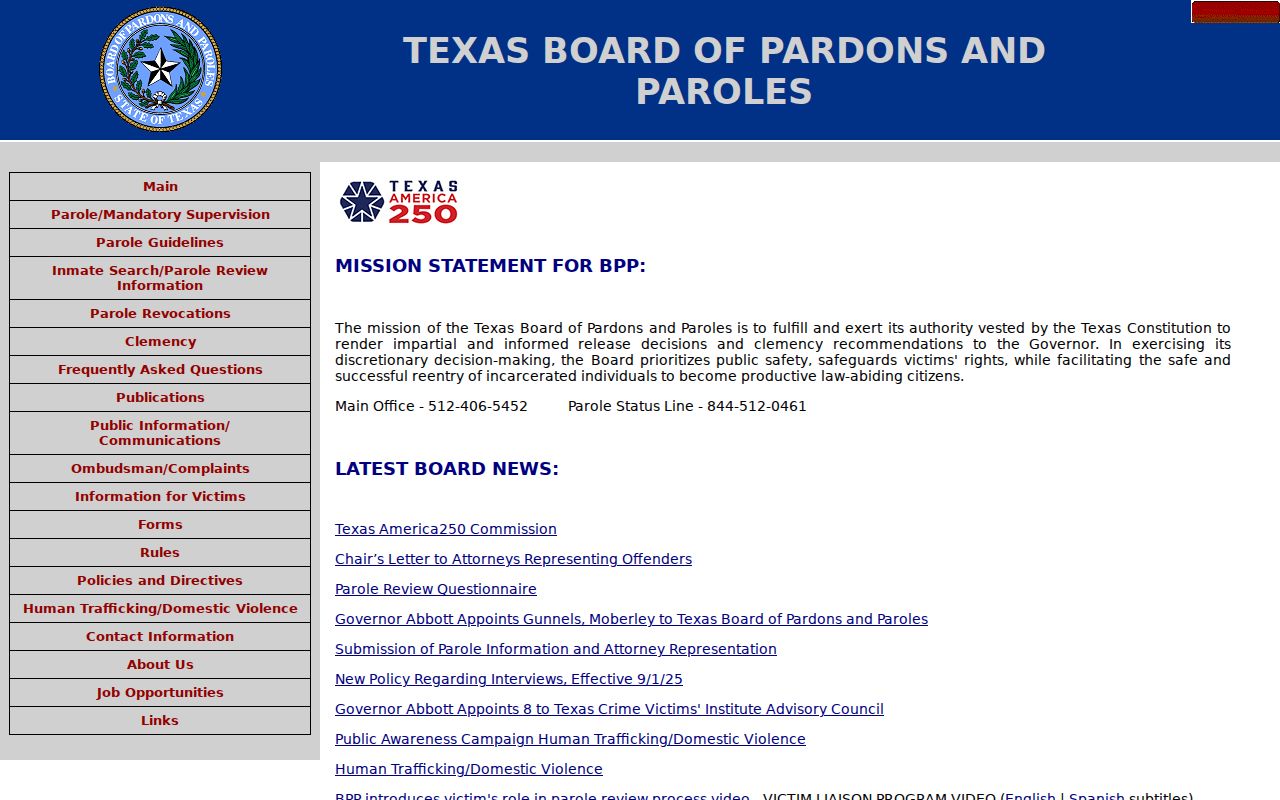
This source helps prevent a common mix-up: parole status does not replace the Franklin County registry profile, and the registry does not establish current parole supervision.
When the goal is to understand the original disposition or sentence, request the court file from the clerk that handled the cause. A registry search is narrower. It shows the public registration layer and does not reproduce every motion, order, plea, or sentence term. That distinction also matters when an old registry image conflicts with the current DPS entry.
Franklin County Registry Error Reports
If a Franklin County entry appears wrong or out of date, note the profile, address, displayed verification date, and the objective reason for concern. Report those facts to the Franklin County Sheriff, the Mount Vernon Police Department when it is the assigned authority, or DPS. Do not visit the address or attempt to verify compliance yourself. Law enforcement can determine whether the person reported a change, whether an update is still processing, and whether further action is warranted.
Franklin County community awareness works best when it stays tied to current official facts. Refresh the live profile before relying on a saved result. Confirm the right person through several identifiers. Use the registry to inform safe choices, not to label a household or infer a new offense. Those steps preserve the public-safety purpose of the Texas Public Sex Offender Registry.
Using Registry Information Lawfully
Registry information supports personal, family, and community safety. Texas notification and school-notice procedures depend on the statutory category and risk classification. DPS supplies the authoritative current public listing.
Franklin County residents can use it to plan lawful precautions, check a location, and pass a specific concern to the assigned authority. They should not copy profiles into a separate local directory that can become stale.
Misuse warning: Chapter 62 registry data is for public safety. Misuse through harassment, threats, stalking, retaliation, or unlawful confrontation is a crime under Texas law.